
Government Medical Colleges:
38
Total Government MBBS Seats:
5100
Private Medical Colleges:
33
Total Private MBBS Seats:
4900
Introduction
The Maharashtra Medical Council (MMC) is a statutory body established under the Maharashtra Medical Council Act, 1965 to regulate the practice of modern medicine and maintain professional standards for medical practitioners across the state of Maharashtra. The council was formally constituted in 1966 and functions as an autonomous authority under the Government of Maharashtra.
MMC is responsible for regulating the registration and professional conduct of doctors practicing modern medicine in Maharashtra. It ensures that medical practitioners meet the required educational qualifications and adhere to ethical standards as prescribed by law.
The council is headed by a President elected from among its members. It consists of elected and nominated members, including representatives from the state government, medical universities, and registered medical practitioners.
Key Functions of MMC
Registration and renewal of registration of medical practitioners
Maintenance of the State Medical Register
Regulation of professional conduct, ethics, and discipline of doctors
Taking disciplinary action in cases of professional misconduct
Ensuring compliance with medical laws and standards in Maharashtra
Courses Regulated by MMC
MBBS (Bachelor of Medicine & Bachelor of Surgery)
Postgraduate Medical Degrees and Diplomas (MD / MS / DNB)
Super-Specialty Medical Courses (DM / MCh)
Note: MMC regulates only modern medicine (Allopathy). Nursing, dental, physiotherapy, and AYUSH courses are governed by separate councils.
National Affiliation and Recognition
The Maharashtra Medical Council operates in alignment with national medical regulations and is recognized under the National Medical Commission (NMC), which replaced the Medical Council of India (MCI). This ensures that medical education and professional practice in Maharashtra remain consistent with national standards.

Eligibility
Basic Requirements
Must be 17+ years by 31 December
Must have passed 10+2 with PCB
Must meet the minimum qualifying marks as per NMC/state
Valid NEET-UG score is compulsory
For Management Quota
Any Indian student with NEET qualification
Some colleges prefer domicile.
Factors to Consider Before Taking Admission
Before taking admission under management quota in Maharashtra:
Ensure your NEET score meets the minimum eligibility criteria of the college.
Be prepared for higher fees compared to government quota seats.
Verify the college’s accreditation, infrastructure, and hospital affiliations.
Check patient inflow, clinical exposure, and internship opportunities.
Consider hostel facilities, campus safety, and lifestyle expenses.
Review feedback from current students or alumni for real insights.
See Documents Required for MBBS Admission
Process
Fee Structure

Note: The fee details mentioned below are estimated figures based on recent admission trends. Actual fees may vary slightly from college to college. Students are advised to check the official college website or state counselling authority for the most accurate and updated information.
MBBS Fee Structure
Annual MBBS Fees: ₹6–8 Lakhs per year
This usually includes:Tuition fees
Hostel accommodation
Food/mess charges
Uniform and basic facilities
Approximate Living & Miscellaneous Expenses: ₹1.5 Lakhs per annum
BDS Fee Structure
Annual BDS Fees: ₹7–8 Lakhs per year
Approximate Total Expenses: ₹2.25 Lakhs per annum (Around ₹10,000 per month for living and other costs)
MDS Fee Structure
Annual MDS Fees: ₹8 Lakhs per year
Approximate Total Expenses: ₹2.75 Lakhs per annum (Around ₹12,500 per month for living and other costs)
Maharashtra Private Medical Colleges – MBBS Management Quota Fees
Important Points to Remember
Management quota admissions are strictly based on NEET-UG qualification.
Fees are subject to revision by the Maharashtra state counselling authority or the college.
No college offers direct or offline admission without NEET-based counselling.
Entrance
The National Eligibility cum Entrance Test (NEET-UG) is a national-level entrance examination conducted by the National Testing Agency (NTA) for admission to MBBS and BDS courses across India, including medical colleges in Maharashtra.
NEET-UG is mandatory for all students seeking admission to undergraduate medical courses in government and private medical colleges in Maharashtra. Admission to MBBS seats in the state is strictly based on NEET-UG score and the Maharashtra state counselling process.

Exam Duration
Scoring System & Subjects
Importance of NEET-UG for Maharashtra MBBS Admission
About National Testing Agency (NTA)
The National Testing Agency (NTA) is a government body established in 2017 under the Ministry of Education (MoE) to conduct major national-level entrance examinations in India. NTA ensures a transparent, efficient, and standardized testing system for students across the country.
Role of NTA in Medical Admissions
NTA conducts the National Eligibility cum Entrance Test (NEET-UG), which is mandatory for admission to MBBS, BDS, and other undergraduate medical courses.
NEET-UG scores are used for admission to government, private, and management quota MBBS seats in Maharashtra.
Note: NEET-PG is conducted by the National Board of Examinations (NBE), not NTA.
Key Features of NTA
Conducts entrance exams in a transparent and standardized manner.
Uses advanced technology to ensure fair evaluation.
Follows uniform exam patterns to reduce exam-related stress.
Ensures credibility and reliability in the admission process.
Governance
NTA is governed by a Governing Body consisting of experts from education, medicine, administration, and law, ensuring high standards in examination conduct.
Exam Frequency
NEET-UG: Conducted once a year.
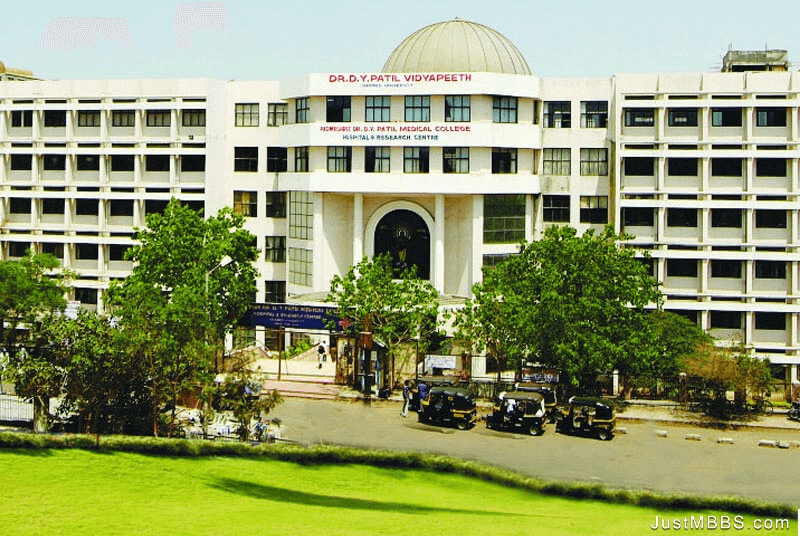
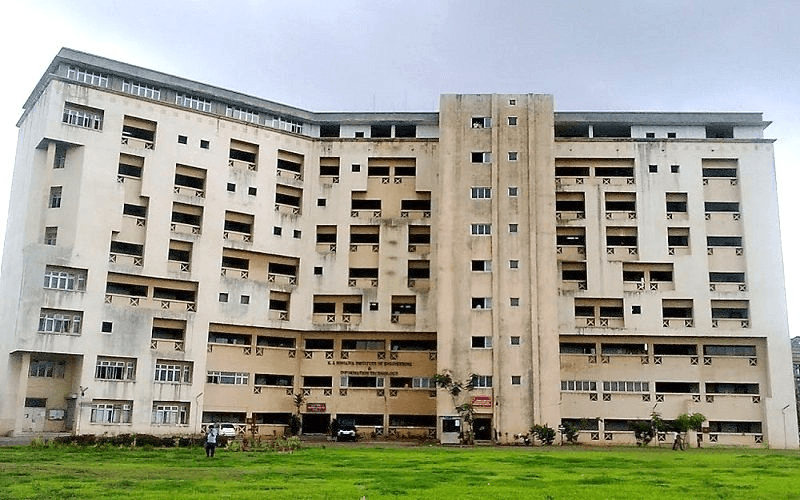
Colleges


Cutoff
What the NEET cutoff means
The qualifying cutoff percentile is the minimum percentile you must achieve in NEET to be eligible for MBBS/BDS admissions and state or All‑India quota counselling.
General (Unreserved) Category
Percentile required: 50th percentile
Approximate marks range: 686–144
Economically Weaker Section (EWS)
Percentile required: 50th percentile
Approximate marks range: 686–144
EWS follows the same cutoff as the General category.
Other Backward Classes (OBC‑NCL)
Percentile required: 40th percentile
Approximate marks range: 143–113
Scheduled Caste (SC) and Scheduled Tribe (ST)
Percentile required: 40th percentile
Approximate marks range: 143–113
Persons with Benchmark Disabilities (PwBD)
General‑PwBD: 45th percentile (≈143–127 marks)
OBC/SC/ST‑PwBD: 40th percentile (≈126–113 marks)
Important Notes
These cutoffs are for qualifying NEET UG 2025 and participating in counselling — not final admission cutoffs for specific colleges, which can be significantly higher.
Colleges and states use additional factors (state quota, AIQ ranks, reservation, seat matrix) to determine actual admission cutoffs beyond the minimum qualifying marks.
Counselling
Overview
MBBS admissions in Maharashtra are conducted through the NEET‑UG Counselling managed by the State Common Entrance Test Cell (CET Cell), Maharashtra. This centralised process covers both government and private medical colleges in the state.
Seat Categories
State Quota Seats
Primarily for candidates with Maharashtra domicile under the 85% state quota.
A part of these seats is further divided by regional and category reservations (SC/ST/OBC/EWS/PwBD).
15% of total MBBS seats are filled through All India Quota (AIQ).
Maharashtra MBBS Seat Allotment Process (Step‑by‑Step)
Online Registration for Counselling
Register on the official CET Cell counselling portal.
Upload NEET score, personal details, and required documents.
Merit List Publication
State NEET merit list is published based on NEET‑UG results and Maharashtra eligibility.
Category‑wise merit lists are released (SC, ST, OBC, EWS, PwBD).
Document Verification & Validation
Uploaded documents are verified online by the CET Cell.
Candidates must ensure authentic NEET scorecards, 12th mark sheets, domicile certificates, caste/EWS certificates (if applicable), etc.
Choice Filling & Counselling Fee Payment
Candidates enter their preferred colleges and courses.
Counselling fee must be paid during this step to proceed further.
Round Seat Allotment Result (Online)
The allotment list is published after each round of counselling.
Candidates can check which college and course they’ve been allotted.
Reporting at Allotted College
Download allotment letter.
Report to the college within the specified timeframe with all original documents and fees.
Colleges retain original documents until course completion.
Documents Required at Reporting
Original NEET Scorecard & Admit Card
Class 10 & 12 Mark Sheets / Certificates
Domicile Certificate (for state quota eligibility)
Category / EWS / PwBD Certificates (if applicable)
Allotment Letter
Demand Draft / Proof of Fee Payment
Self‑attested photocopies of all documents (multiple sets for college submission)
Maharashtra MBBS Counselling Rounds
First Round of Counselling (Online)
Seat allocation based on NEET rank, preferences, and reservation criteria.
Second Round of Counselling (Online)
Fresh allotment or upgradation based on vacant seats and choices.
Mop‑Up / Vacancy Rounds
Conducted to fill remaining vacant seats after primary rounds.
These may include centralised and institute‑level processes as per CET Cell decisions.
Stray Vacancy Round (If Applicable)
Final round of seat filling for any seats left unfilled after Mop‑Up.
Seats may be offered based on NEET merit and counselling rules.
Important Notes
Maharashtra counselling operates mainly through the Centralised Admission Process (CAP) managed by the CET Cell.
The process is online, transparent, and merit‑based, reflecting NEET‑UG performance and reservation policy.
Domicile and category certificates must be valid and genuine for eligibility in state quota seats.

FAQs
How are MBBS seats in Maharashtra allocated?
Who is eligible for Maharashtra state quota seats?
What documents are required for reporting at the allotted college?
How many rounds of counselling are conducted in Maharashtra?
Why GetIntoCampus

Studying MBBS in India gives you quality education, practical exposure, and a clear career path — all with the guidance and support of GetIntoCampus. Here’s why thousands of students choose us:
1. NMC-Approved Curriculum
We help you get admission to colleges following the National Medical Commission (NMC) standards, ensuring globally recognized degrees.
2. Strong Clinical Exposure
Gain hands-on experience with patients from day one, preparing you for real-world medical practice.
3. Affordable Education Compared to Abroad
Top private and deemed universities in India offer cost-effective MBBS seats, saving you lakhs compared to foreign options.
4. High Patient Inflow & Practical Learning
Indian medical colleges provide exposure to a large number of patients, ensuring practical knowledge and skill development.
5. NEET-Based Transparent Admissions
Every admission is based on NEET scores and verified quotas, giving you a legal and fair path to MBBS.
6. Smooth Progression to NEET PG
Studying in India sets you up for NEET PG and further specialization, making your career journey seamless.




Contact us
🎯 Seats are filling fast under the management quota.
Call our admission experts for personalized guidance
Get detailed fee structure PDFs on WhatsApp
Assistance with safe PG accommodation near campus